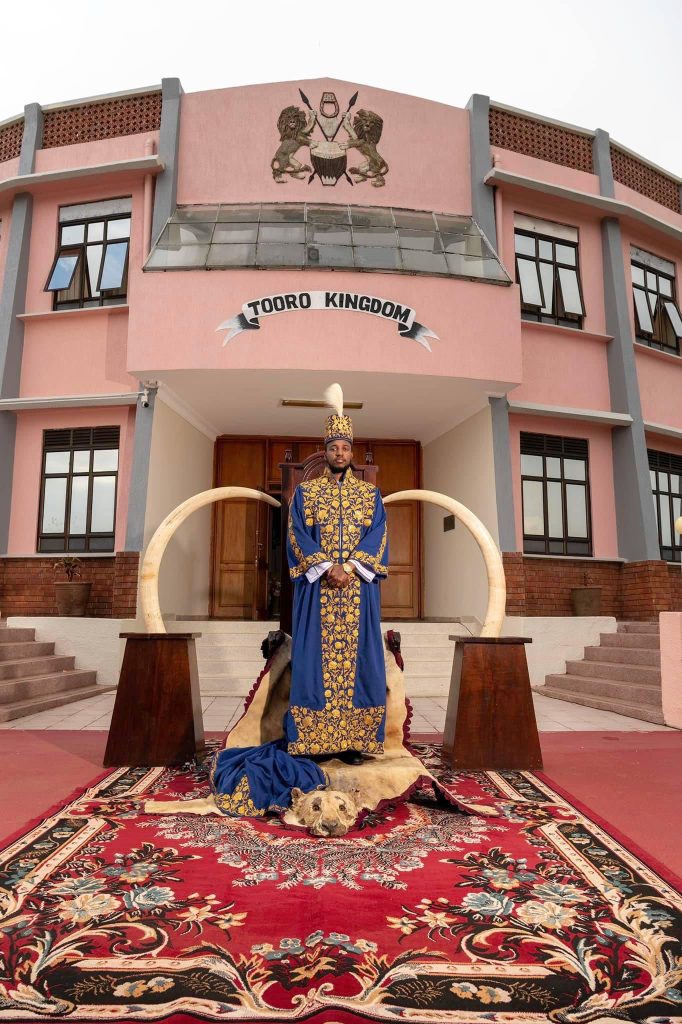
One of Uganda’s prominent young Kings – The King of Tooro Kingdom; His Majesty Oyo Nyimba Kabamba Iguru Rukidi IV passed away on August 27th 2026. May His Soul Rest In Peace!
His passing is historical having been Uganda’s youngest king who was enthroned at 3 years of age upon the passing on of his father. The tragedy came with its own controversy about the next king to take over from him based on the Tooro cultural norms, the interface with the State and its regulations regarding cultural institutions and the people’s wishes as widely shared on various media platforms.
We had a conversation with our Board Member Mr. Job Kiija also a governance expert and policy analyst security as we take a deep dive into what this means for cultural institutions, their regulations and people’s interests whom these institutions serve.
1. To begin with, what is your reading of the recent events regarding Tooro Kingdom succession since King Oyo passed away?
The chaos we are seeing is the predictable explosion of an outdated system trying to govern itself using secret wills and WhatsApp rumors instead of institutional transparency. The instant polarization between the 21 Babiito clan elders backing Prince Edward Rukidi Kijanangoma and the immediate royal family holding onto a secret will proves that the kingdom is operating like a private family estate rather than a public cultural trust. It is a modern palace coup played out in the media. This crisis exposes a glaring institutional vacuum: if a kingdom cannot handle succession, its core cultural reason for existing, without plunging into immediate legal and structural warfare, then it is structurally broken.
2. Tell us your historical perspective of the Tooro kingdom and how succession of Kings has always been held and what followed there after?
Historically, Tooro was born out of rebellion and succession disputes; breakaway violence is literally in its DNA. Tooro split from the Bunyoro-Kitara Empire in 1822 because Prince Olimi I chose self-determination over total submission. Historically, succession was rarely a peaceful boardroom meeting; it was decided by who had the strongest bloodline, the backing of the supreme clan elders, or the military might to suppress rivals. What followed historical successions was usually the consolidation of centralized power or violent splintering. Today’s battle between the “Will of the King” and the “Decree of the Babiito Elders” is just a modernized version of that ancient factional warfare, proving that the kingdom has failed to evolve its customs into clear, unassailable, written modern protocols.
3. In your analysis of these matters, how far should the State intervene in deeply cultural matters like throne inheritance and choosing cultural leaders?
The State should not dictate who sits on the throne, but the State must aggressively enforce the rule of constitutional law when these institutions threaten public stability. Let’s be radically honest: cultural institutions in Uganda exist by the grace of Article 246 of the Constitution, which restored them under strict boundaries. The State should act strictly as an objective referee, ensuring that whatever process the kingdom uses is transparent, respects human rights, and adheres to administrative fairness. When the State interferes politically to install puppet kings for electoral leverage, it cheapens the monarchy. But if the kingdom descends into legal lawlessness that disrupts the peace of Ugandans, the State has a mandate to intervene and lock the palace gates until order is restored.
4. How effective are Uganda’s laws and regulations of cultural institutions in protecting people’s interests?
Uganda’s cultural laws are entirely toothless and fundamentally flawed because they were designed for political containment, not citizen protection. The Institution of Traditional or Cultural Leaders Act is presented more like a cage to keep kings from meddling in state politics than a tool to ensure cultural resources benefit the common man. These laws protect the privileges of the royals rather than the interests of the people. There are no mechanisms in state law holding a kingdom accountable for failing to deliver development, nor are there legal channels for subjects to challenge a corrupt or incompetent cultural leadership without being branded as traitors to their heritage.
5. Do you get the feeling that the people within these kingdoms understand these laws and regulations?
Absolutely not, and this ignorance is highly weaponized by both the state and royal elites. The vast majority of subjects view the kingdom through a lens of pure emotion, spiritual reverence, and romanticized history. They do not read the Constitution or the Cultural Leaders Act. Royal elites exploit this emotional blindness to shield themselves from accountability, framing any critique of the palace as an attack on the culture itself. Conversely, the State uses the ambiguity of the law to manipulate factions behind the scenes. The people are left as cheering spectators in a game where the rules are deliberately hidden from them.
6. Do we have other African examples where cultural power and transition has been handled smoothly? If so, share some of them and what they have been able to do successfully?
Yes, we must look to the Ashanti Kingdom in Ghana, the Zulu Kingdom in South Africa, and right here at home, the Buganda Kingdom, which have survived because they institutionalized their succession models instead of leaving them to chance.
Buganda Kingdom (Uganda) provides a masterclass in separating individual royal whim from institutional survival. In Buganda, a reigning Kabaka does not simply write a secret personal will to unilaterally appoint his successor. Instead, the custom dictates that the Kabaka passes on leaving a panel of eligible princes (from the royal line), and the Katikkiro (Prime Minister) along with the clan leaders (Abatakka), specifically the Mugema, act as the supreme institutional kingmakers. They vet and choose the next Kabaka based on strictly defined custom and the strategic interests of the Kingdom. This institutional layer prevents individual family greed from fracturing the state, which is why Buganda has managed to maintain absolute institutional continuity and stability even during moments of immense political stress.
In the Ashanti Kingdom (Ghana) when an Asantehene passes away, the Queen Mother (Asantehemaa) acts as the institutional kingmaker. She nominates a successor in consultation with the council of elders through a deeply respected, clear, three-stage vetting process. It is a masterclass in customary constitutionalism that prevents public bickering.
Then the Zulu Kingdom (South Africa); even though they recently faced a bitter succession battle after King Goodwill Zwelithini died, they utilized the modern South African legal court system alongside customary law to resolve it openly.
The success factor here is simple: these kingdoms have distinct, uncompromising, and universally respected customary institutional steps that cannot be hijacked by an individual family member’s secret diary.
7. What lessons should other kingdoms learn from all this experience?
The brutal lesson is clear: codify your customs or prepare for your extinction. Kingdoms like Buganda, Bunyoro, and Busoga must realize that emotional reverence cannot withstand modern legal and political pressures.
First, kingdoms must write down explicit, legally binding succession acts that harmonize ancient customs with modern statutory law.
Second, they must stop relying on the personal whims of a reigning monarch’s hidden will to decide the fate of a nation’s identity.
Third, they must build institutional structures that survive the individual. If your kingdom collapses into chaos the moment a leader dies, you do not have a kingdom, you have a cult of personality.
8. Your parting shots to the people of Tooro Kingdom?
Tooro people should stop fighting over the driver of the vehicle when the vehicle itself has no engine. The youth and people of Tooro must stop blindly pledging allegiance to royal factions that care more about palace real estate and titles than the poverty, lack of jobs, and underdevelopment in the region. They should demand that the Babiito clan and the royal family resolve this circus immediately. Force them to modernize the kingdom into a transparent, developmental institution that serves the people, or accept that Tooro will degenerate into a meaningless, decorative museum piece subsidized by the central government. Cultural pride without institutional accountability is a recipe for irrelevance.