By Elone Natumanya Ainebyoona
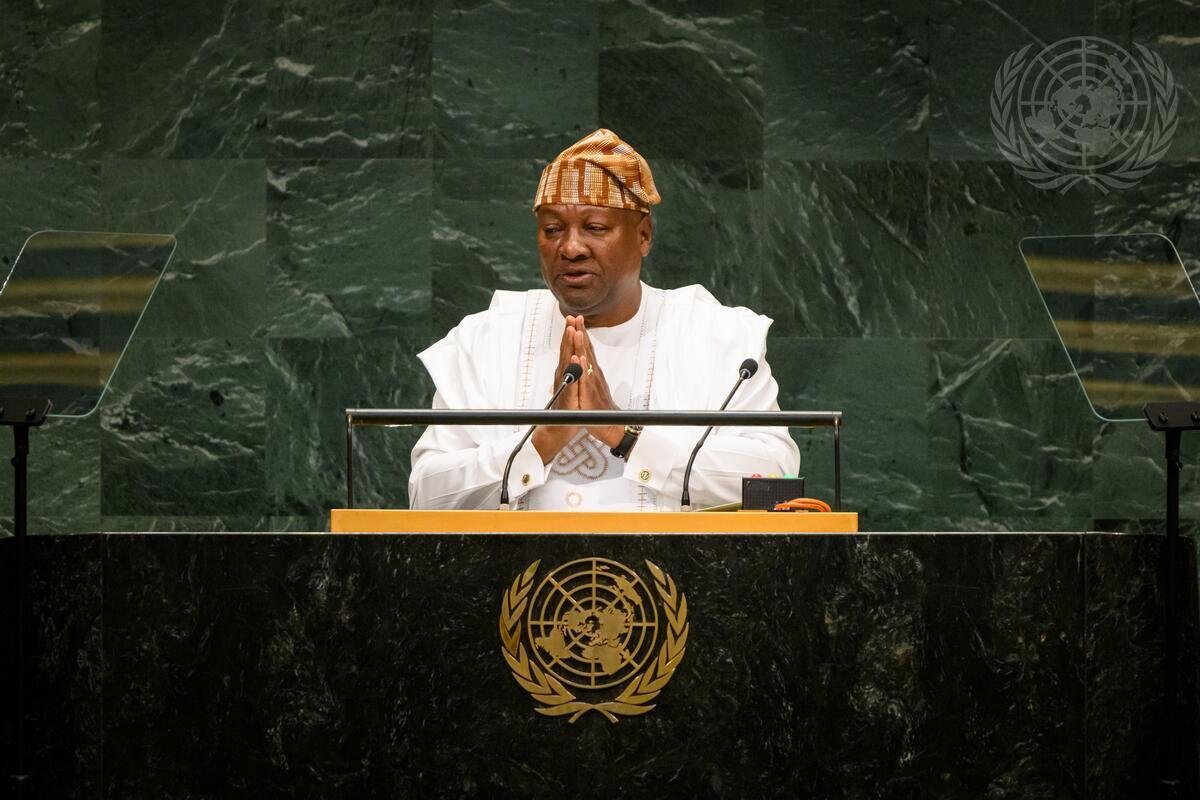
“The same systemic inequality permeates the international financial architecture. Developing nations borrow at interest rates up to eight times higher than industrialised nations.” These were the words of H.E. John Dramani Mahama, President of Ghana, at the 81st Session of the United Nations General Assembly (UNGA) on 24th September 2026.
Statements like these carry the truth about how Africa has been treated by global financial institutions. African leaders echo them at nearly every international meeting of this nature, calling for justice and equality in the global financial architecture. They speak of unfair borrowing costs, of a financial system built for another era, of a continent that deserves a seat at the table.
“We need long-term, affordable, and accessible concessionary financing that enables developing economies to invest in human capital, industrialisation, and climate adaptation,” President Mahama said. At last year’s General Assembly, Kenya’s President H.E William Ruto pressed the same case from the institutional side, backing African-owned financial institutions.
Applause follows, and the communiqués are long. Then delegations fly home, and the debt-service bills keep growing, choking African economies.
That said, Africa must also look into its own house. Mahama himself told fellow leaders that if Africa demands a place at the table, it must put its own house in order, with transparency and accountability. To manoeuvre through this storm of debt and become a strategic negotiator at the global financing table, Africa must first build its collective negotiating power and organise its own structures. Bargaining power is not a speech but a structure, and it rests on three things: one voice, control over how risk is priced, and a deep pool of home-grown capital, with tools to de-risk it.
In the last two years alone, the continent has produced the Lomé Declaration, the Abidjan Consensus and, in February 2026, the Common African Position on Debt. Why, then, the lamentation? What is missing is the discipline to make these pieces work together.
Africa needs one voice
The weakness in bargaining lies in lone negotiations, yet that is what most African countries still do. Of the 33 countries worldwide in debt distress, 21 are African, and creditors know that a country facing them singly has little choice. The continent needs to negotiate as a bloc and use positions like the African Union’s permanent seat at the G20. Governments should give the AU Commission a standing technical team with a real mandate, agree red lines for restructurings in advance, and share debt data openly, so that no country is picked off one at a time. They should also use the new Borrowers’ Platform, launched under the stewardship of UN Trade and Development (UNCTAD), which helps borrowers coordinate instead of competing for creditors’ attention.
A continental debt strategy is only as strong as its tools, and two of them, a unified African term sheet for negotiations and a continental debt-monitoring mechanism, are still being finalised. Ghana takes over the AU Chairmanship in January 2027, and President Mahama has promised to use it to make Africa speak with one resolute, undivided voice. That is a promise worth holding leaders to.
Collective borrowing is not new elsewhere. Europe’s 27 members still borrow on their own, but when crises struck they built shared tools. The eurozone debt crisis produced a permanent rescue fund, the European Stability Mechanism. The Covid-19 pandemic produced NextGenerationEU, a 750 billion euro recovery programme financed by the European Commission borrowing on markets as one issuer. These grew out of necessity and work because members trust one another and respect the rules set for them. They come with costs, but they allow the bloc to borrow together, with shared guarantees, and to negotiate from a position of strength. Africa already has the building blocks, such as policy structures. What it must now build is the trust and rule-keeping that make them work.
Who then sets the price of risk for Africa?
For decades, three Western-based agencies (S&P Global Ratings, Moody’s and Fitch Ratings), often called the “big three”, have shaped what Africa pays to borrow. African leaders argue this has created an “Africa premium” that owes more to perception than to fundamentals. H.E William Ruto has gone as far as accusing the global agencies of deliberately failing Africa.
At the 38th African Union Summit, in February 2025, H.E Ruto noted, “They rely on flawed models, outdated assumptions, and systemic bias, painting an unfair picture of our economies and leading to distorted ratings, exaggerated risks, and unjustifiably high borrowing costs.”
The agencies reject the criticism, and a 2024 Reuters investigation found no evidence of systemic bias in their sovereign ratings, so the debate is far from settled. Perhaps what Africa needs is a body that can complement “big three” to give a fair and balanced credit rating.
Africa seems to be on the right path to dealing with this challenge. On 7th October 2026, the Africa Credit Rating Agency (AfCRA) was launched in Mauritius in collaboration with the African Union, the African Peer Review Mechanism (APRM) and the UN Economic Commission for Africa (UNECA). It is an independent, private-sector-driven institution, not owned by African governments, meant to give investors an African-informed perspective alongside the global rating giants. The AU Commission’s own chairperson has cautioned that a rating agency alone will not significantly lower the cost of capital in the near term.
For this mandate to succeed, African governments must protect AfCRA’s independence, respect its analysis even when it is uncomfortable, and keep political pressure out of its ratings. In return, regulators can recognise its assessments in local markets, helping to deepen the domestic bond markets that reduce dependence on foreign lenders. Indeed, if Africa feels it has been marginalized for a long time, then it needs to protect its own credit rating agency and prove itself capable of self-governance.
Africa has capital of its own
Beyond setting up systems, Africa needs to look within. AfCRA’s chief architect has spoken of Africa’s roughly $4 trillion in savings indicating that the problem is not a shortage of capital but failure to be pointed at African priorities.
The African Development Bank and Afreximbank are the continent’s own financiers, but they need stronger commitment from their shareholders. Governments should pay their capital subscriptions on time and treat these banks as instruments of national strategy, not as one more donor to be lobbied.
This same approach applies at home (nationally). Pension funds and insurers hold large savings, much of it parked abroad or in short-term government paper. With accountability and efficiency, there is no reason African governments cannot rely more on their own financial mechanisms. That means reforming investment rules so that a prudent share can finance roads, power and housing, turning savings into development without asking anyone’s permission.
Africa also needs to turn the African Continental Free Trade Area, a market of over a billion people, into reality, by implementing the agreed tariff schedules and payment systems if financial independence is to be achieved.
Managing risk requires more commitment
Capital moves when risk is manageable. This is where the African Trade and Investment Development Insurance (ATIDI) comes in, offering political and credit-risk cover for projects and lenders. With guarantees in place, private capital flows more cheaply, and a modest premium can make an infrastructure project bankable that would otherwise sit on the shelf. More African countries should join and use ATIDI, and build it into how they structure public-private projects, which would lower the cost of financing at the source.
Time to move from communiqué to implementation
Africa has already set out in various treaties what it needs to do. Governments now need to reorganise how they work together and these five steps could make the difference.
First, make the Common African Position operational: finish its unified term sheet and debt-monitoring mechanism, and back them with a standing negotiating team and pre-agreed restructuring principles. Second, publish debt data openly and on time, because transparency is the price of collective credibility. Third, protect AfCRA from political interference and recognise its ratings in local regulation. Fourth, fund and use African institutions: pay subscriptions to the African Development Bank and Afreximbank, and route projects through ATIDI guarantees. Fifth, unlock domestic savings by modernising pension and insurance investment rules, with efficiency and transparency.
Above all, ministries of finance should publish an annual scorecard against these commitments, so that governments hold each other accountable and citizens can see who delivered and who only spoke.
Negotiating fair terms for global financing requires a united voice. An Africa that speaks with one voice, prices its own risk and funds its own priorities will bring action beyond presenting positions on various platforms. The world respects united fronts that negotiate collectively. The institutional architecture is largely built. The task now is to make it work.
ENDS.
The Writer is the Associate Director at DEI